They called it human-centric
until it went wrong.
Shima Beigi, PhD works with cities, urban authorities, and AI-driven organisations to design governance architecture for digital transformation — placing human agency, civic life, and long-term resilience at the centre of technological change.
For cities and institutions navigating AI-driven urban change
I work at the intersection of smart cities, artificial intelligence, and human-centred transformation. My role is not simply to critique technocentric urbanism, but to help cities and institutions think more clearly about the kind of urban futures they are designing.
Through advisory work, strategic frameworks, and public speaking, I help decision-makers move beyond narrow technological deployment and engage the deeper social, civic, and human dimensions of transformation.
The term 'smart cities' is typically linked with the integration of ICT technologies into urban environments.
However, while penning my book Mindful Smart Cities, I found myself contemplating the genesis of this 'smart' concept and its implementation in cities.
If you're involved in the development aspect of smart cities, the question of their origin might seem counter-intuitive or even irrelevant. You're likely more focused on the potential of smart technologies in creating smart homes, smart energy, smart mobility, or strategies to help cities achieve their sustainability goals.
Here, however, I aim to paint a broader picture, moving beyond the standard definitions and established models. We have to explore the root of smart cities — the socio-technological nucleus known as the Network Society.

The vision of a Mindful Smart City isn't solely about leveraging technology to improve the urban experience.
It's about doing so in a manner that respects and enhances our humanity, rather than diminishing it to a string of algorithmic calculations.
So, in quest to build such a city, we must first understand the complex morphology of the Network Society, learn from past misconceptions about the use of technology, and course correct towards a vision that cares about cities' civic space as sanctuaries of social renaissance.


Smart cities appeared in formal discussions under 'digital cities' or 'tele-cities' as an EU-Commission-backed initiative — aimed at promoting technological solutions for interoperability, interconnectivity and standardisation.
However, the smartness promoted by tele-cities was never truly suitable for cities' organic form and people's experiences, as it was unaware of the deeper transformative forces taking place not just in Europe but worldwide.
Telecities' smartness was a narrow-minded solution to retain cities' economic attractiveness, retrofit crumbling central governance models, and prevent their flattening to decentralised models. This narrow-minded approach to smartness has significant societal implications that we must be aware of.
The seed thought behind building smart cities was thus politically and economically motivated.
This is one of the main reasons that the narrative of technocentricity has become the current standard. The narrative assumes that the more ICT or IoT devices a city has, the smarter it is — translating into political power over the civic space of cities.

During the 1990s, governments began to perceive a decline in relevance, prompted by the growing demand for online spaces that would free citizens from dependence on governmental entities.
Something was transpiring. Something was disintegrating or, more accurately, transforming into something different.
For the first time at a collective level, citizens were becoming aware of their civic rights. They started to question the concept of governance and the validity of top-down hierarchical power structures.
In reaction to this shift in power dynamics, authorities became fixated on transferring their authoritative and controlling presence into the digital realm.
While this solution initially seemed rational, the authorities failed to comprehend the unfolding events.

The real issue was not technological.
Communities were not merely adapting to digital clusters — they were discovering their voice and power in a new environment. They were not circumventing governments. They were seeking something deeper: a sense of belonging in a rapidly evolving world.
This shift was about comprehending subtle changes at the deepest layers of societies — filling a gap that top-down authoritative structures were ill-equipped to address.
The real challenge was dual-faceted.
Public spaces were diminishing and becoming more regulated and owned by private actors. Citizens felt the civic space was vanishing — they were 'leasing' the city from these actors. Consequently, the Right to the City declined.
Communities gradually transitioned their civic focus towards rising digital domains. While cities were subtly evolving into marketing powerhouses, another development was taking form: the Network Society.
Upon scrutinising the primary challenges of smart cities, we encounter issues such as surveillance capitalism, safety, privacy concerns, techno-centricity, loss of urban allure and serendipity, inclusivity, and the digital divide.
It's clear that within the smart city framework, stakeholders have not thoroughly examined how the advent of the Internet is revolutionising our fundamental interactions with the world.


Songdo
IBD
Built on reclaimed land in the Incheon Free Economic Zone, Songdo IBD was designed as a model of technocentric urbanism — sensor-saturated, corporately managed, and largely empty of the social life it promised.
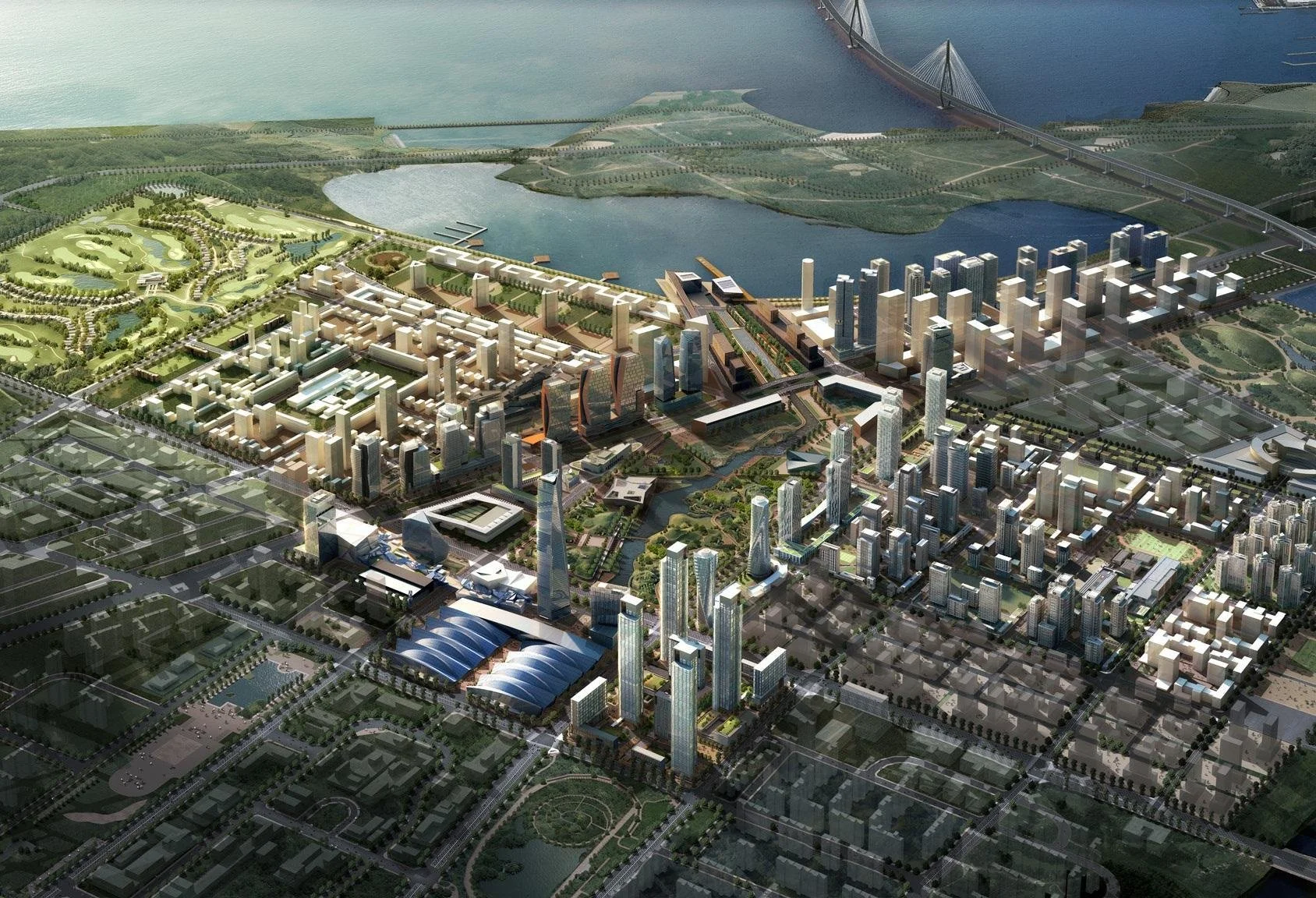
I selected Songdo in South Korea as a case study to demonstrate the urban experience that will emerge from the purely utilitarian use of science, technology, and engineering advances.
The top-down model of self-proclaimed smart cities limits natural processes such as collective intelligence and self-organisation, which enable societies and urban communities to become smarter over time.
In other words, smartness cannot be manufactured in technological labs and injected into cities by Big Tech giants. Instead, building smartness requires time, space, culture, emotion, understanding, empathy, compassion, and love to be formed.

Who Built It
Songdo was built by cooperatives comprising local governments and IT companies — IBM, Cisco, Siemens, Intel, and Samsung — as technology suppliers.
The city as an extension
of the client.

The principal reason is technology companies' inherent interest in expanding their business proposition and turning the city into an extension of their client.
In such a view, the city is seen as a mechanical 'soul-less' machine that technology providers and stakeholders can commercialise. Another particularly important reason is the assumption that with digitalisation, the world is moving towards knowledge economies — and cities, therefore, need to modernise as fast as possible.
Building from scratch by reclaiming large amounts of land from nature, often mindless to previous traditions, rituals and informal settlements, and partnering with construction and ICT companies are the common ways to build these projects.
Overcoming the techno-centric paradigm requires a change in the value model of smart cities.
| Question | What to Explore | Cost to Community |
|---|---|---|
| What are they? | Value Model | Loss of Social Voice |
| Where are they located? | Social & Political Context | Loss of Freedom |
| Who are their promoters? | Hidden Agendas | Loss of Democracy |
| For whom are they built? | Beneficiaries | Violation of Rights |
| By whom are they built? | Motives | Loss of Subtleties |
| Why are they built? | Motives | Loss of Abundance |
| How to prevent propagation? | Mental Models | Digital Urban Rights |
The Songdo Smart City is an example of a techno-centric approach to city formation that has to be prevented from propagating worldwide.
Fragmentation of the city is the most common practice — potential inhabitants are often selected from the most technologically educated population while excluding the rest. This displacement of individuals' power and agency is disempowering, as it betrays the promise of the Internet Age.
In erecting these types of smart cities, informal settlements and cultural richness are also eradicated because they are not deemed valuable to the profit-driven model of technocentric smart cities.

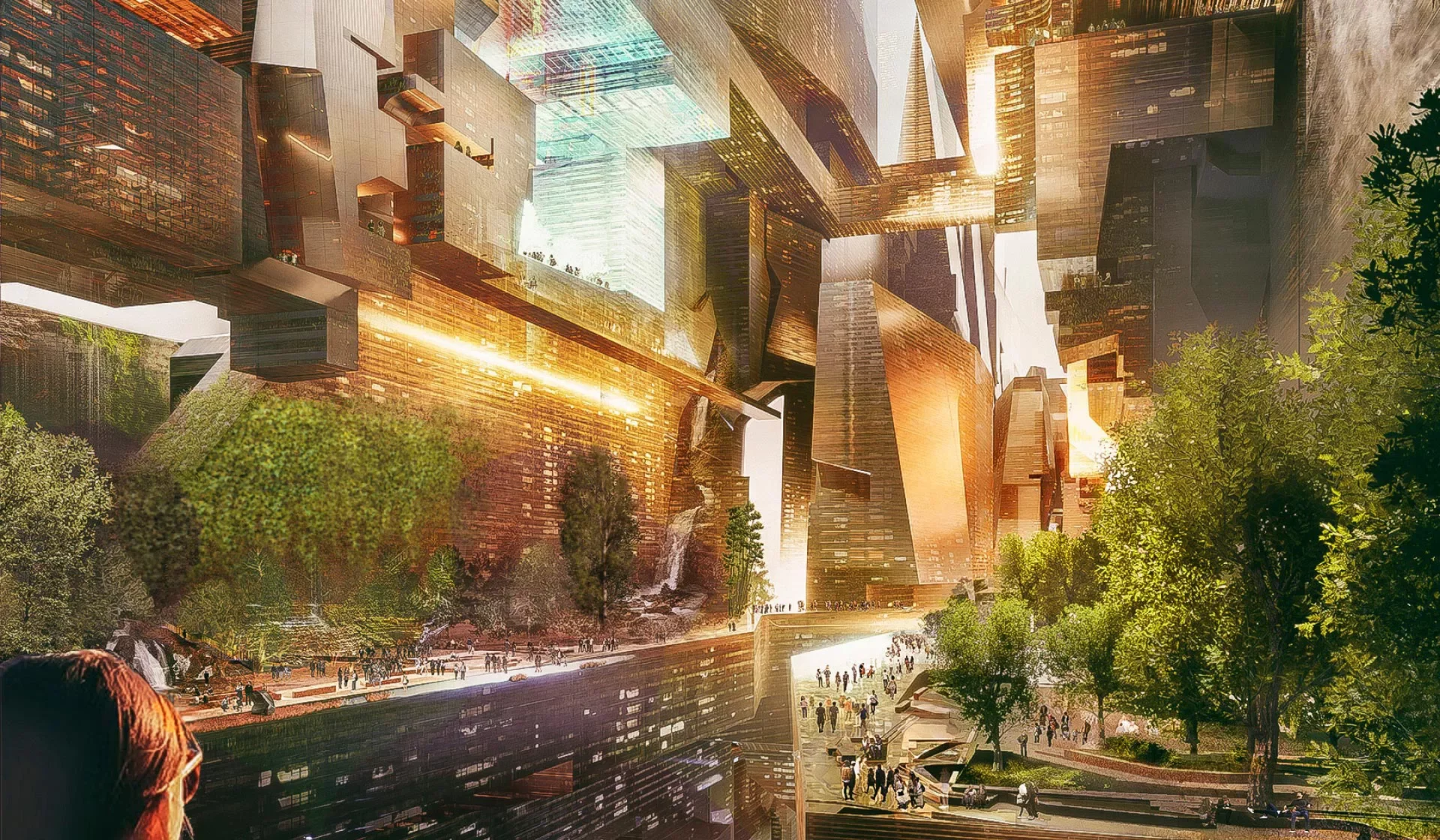

Smartness cannot be manufactured
Smartness requires time, space, culture, emotion, understanding, empathy, compassion, and love. It cannot be produced in technological labs and injected into cities by Big Tech giants.
Citizens selected by tech literacy — rest excluded
Songdo presupposes that future citizens will use smart technologies for almost all aspects of their lives. The technologically educated are welcome; everyone else is excluded.
Agency displaced — not supported
Replacing soft technologies — like learning about better behaviours or becoming more mindful — with solely hard or deep technologies is disempowering. It betrays the promise of the Internet Age.
The city as a soul-less machine
In the technocentric view, the city is a mechanical, soul-less machine that technology providers and stakeholders can commercialise. Citizens are variables. Culture is noise.
Cultural richness erased — not included
Informal settlements and cultural richness are eradicated because they are not deemed valuable to the profit-driven model of technocentric smart cities. What was there is treated as an obstacle.
The same paradigm is propagating worldwide
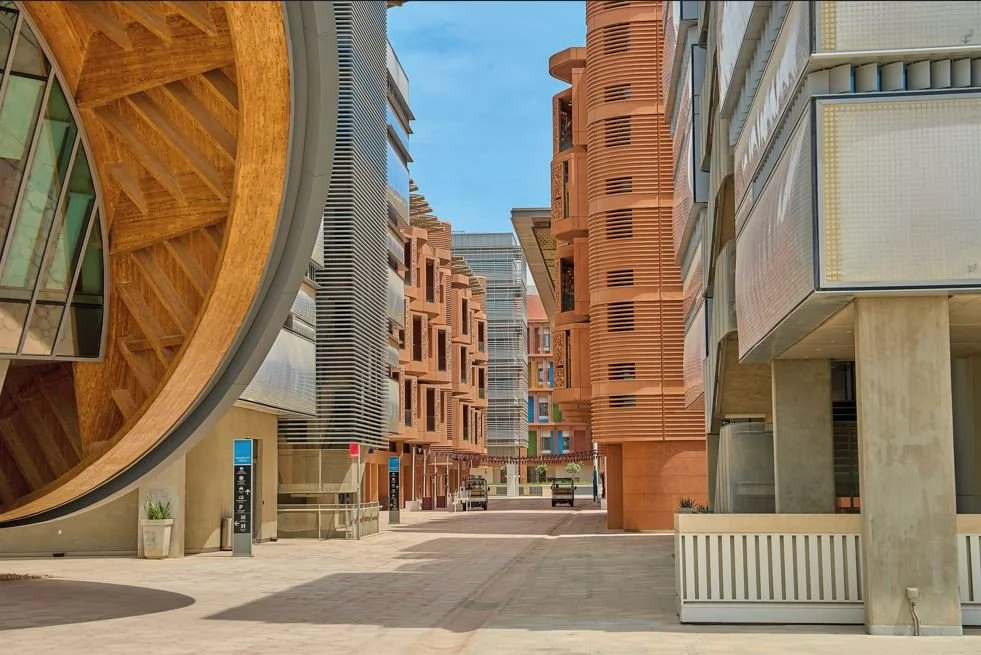
NEOM, Masdar, Hudson Yards. The pattern is not execution failure. It is paradigm failure — and it is accelerating.
Songdo did not fail
because the technology failed.
It failed because the city was seen as a soul-less machine. And cities are not machines.
- Technology → Infrastructure → Citizens
- How do we make it efficient?
- Smart = technology deployment
- Citizens as users / data points
- Culture erased for clean slate
- Consciousness → Community → Technology
- How do we make it alive?
- Smart = collective intelligence
- Citizens as co-creators / rights-holders
- Heritage is intelligence — nothing erased
Talks on smart cities, AI,
and the future of urban life
I speak on the intersection of artificial intelligence, urban systems, and human consciousness — helping audiences understand how cities must evolve beyond purely technological models.
My talks bridge strategy, philosophy, governance, and civic experience, making complex urban questions legible to institutions, conferences, and public audiences.
Mindful
Smart
Cities
Governance architecture for cities navigating the man-machine frontier.
EU AI Act Article 4 compliance architecture — human oversight documented, risk assessed, literacy obligations met before August 2026 enforcement.
A structured assessment of how your city's AI deployments hold up against five digital human rights — with a clear remediation roadmap.
Adaptive governance design that self-diagnoses, recalibrates under pressure, and holds under public and regulatory scrutiny.

Transformation

Principles
Aligned
Three forms of intelligence.
Songdo deployed
only one.
Every failing smart city made the same error: they deployed artificial intelligence without awakened individuality or ancient intelligence. The machine was sophisticated. The city was empty.
Awakened Individuality
The conscious, self-aware citizen. No governance system survives without it. No AI deployment is safe without it.
Ancient Intelligence
The collective wisdom in culture, tradition, and civic practice. What technocentric urbanism erases first — and misses most.
Artificial Intelligence
Powerful. Accelerating. Transformative. Legitimate only when placed in service of the first two — never above them.
This is what working
with Shima looks like.
A structured engagement for urban authorities and AI-driven organisations. Three phases. Six months. Named deliverables at every stage.
Diagnostic
MSC Readiness Assessment across five governance layers. Identifies where your city sits on the spectrum from technocratic optimisation to mindful urban intelligence. Deliverable: scored index with interpretive flags and priority gaps.
Architecture
Co-design of human oversight systems, AI literacy programme, and digital rights audit. Aligned to EU AI Act Articles 4, 9, 13, 14 and 27. Deliverable: governance roadmap and citizen rights assessment your legal team can defend.
Embedding
Executive AI literacy sessions, institutional redesign support, adaptive governance protocols. Deliverable: a leadership team that can govern what it cannot yet predict — and an institution built to hold under scrutiny.
What every citizen
is owed — and what
no failed city provided.
These are not aspirations. They are the structural requirements of any governance model for AI-powered cities — and the standard against which every engagement is measured.
Right to Smart Cities
Cities designed around human flourishing — not corporate optimisation.
Right to Information
Algorithmic logic shaping urban life must be transparent, explainable, and contestable.
Right to Technology
Access to the tools of digital life is a civic right, not a privilege.
Right to Design
Citizens have the right to participate in designing the systems that govern their lives.
Freedom from Algorithmic Nudges
Behavioural systems must support human agency — not quietly replace it.
What leading thinkers say
about this framework.
I see Shima in many ways as maybe operating in the same tradition as Jane Jacobs, arguing for a more human face to cities.
Professor David Sloan Wilson
Evolutionary Biologist · Binghamton University · Author, This View of Life
Mindful smart cities have an enormous potential to transform our world. I fully support Shima's pioneering work and hope to work together in order to make my city a mindful, smart one.
Dr Marios Kyriazis
Biomedical Gerontologist · Specialist Physician
No one is better positioned to synthesise the Eastern and Western traditions — born in Iran, trained at Oxford, a life-long student of consciousness and spirituality. Her thesis answers the need for spiritual answers with a new trajectory of technological development.
Dr Harry Halpin
Research Scientist · Inria, Paris · CEO, NYM Technologies
The framework did not begin
with a consultancy.
It began with a decade
of research.
Shima Beigi's Mindful Smart Cities is the published, peer-reviewed foundation of everything in this advisory practice. Oxford. Bristol. VUB Press. The intellectual architecture was built long before the agentic AI acceleration.
This is not trend commentary. It is a mature framework developed when no one was paying attention — which is precisely why it is relevant now that everyone is.

Mindful
Smart
Cities
Your city will be held
accountable for its AI.
Is your governance ready?
The EU AI Act is enforceable from August 2026. The MSC Advisory is open to a limited number of city authorities and organisations each year. Engagements are selective. The conversation starts here.